

Overview
"Why was this claim not covered as preventive?” is the single most common question we receive related to adjudication decisions. The goal of this guide is to explain why some claims are medical/diagnostic (and frequently charged a cost share) vs. preventive which is guaranteed $0 when in-network per the ACA.
Preventive vs. Medical/Diagnostic
Preventive Care | Medical/Diagnostic Care |
|---|---|
Routine care to prevent illness or identify it early | Care to diagnose, monitor, or treat existing symptoms, conditions, or complaints |
Often covered at 100% with no cost-sharing under ACA | May require copay, coinsurance, or deductible |
Focus: Wellness, screening, early detection | Focus: Diagnosis, evaluation, treatment |
Preventive services
Definition: Preventive services are delivered in the absence of symptoms, as part of a routine wellness visit. These services aim to prevent illness or detect it before symptoms develop.
What makes a service preventive:
Preventive list: the service (i.e., the procedure code) is on the preventive list
Diagnosis: the deciding diagnosis is a screening or routine diagnosis. The procedure code alone rarely decides. (i.e., The same colonoscopy or office visit code can be $0 or have cost share. It depends on why the provider did it, as the diagnosis codes show.)
Network: The provider is in network. Out-of-network preventive care is treated as an OON benefit.
Frequency and age: The member is inside the visit limits, for example one routine physical per plan year. The member is within the range of age for the visit.
Well visit: 1 a year, age 5 and over
Gyn exam: 1 a year
Mammogram: 1 a year
Lung cancer screening (CT 71271 with Z87.891): 1 a year, ages 50–80
Nutrition counseling: 5 a year
Smoking cessation counseling: 5 a year
Examples:
Annual physical exams
Immunizations (flu, tetanus, etc.)
Screening mammogram
Colonoscopy (routine, age-based)
Well-woman and well-child exams
Routine lab work (e.g., cholesterol panel, glucose)
Depression or STD screening during wellness visits
Common situations when a claim is not preventive
Provider is out-of-network (OON)
Preventive care only applies for INN claims.
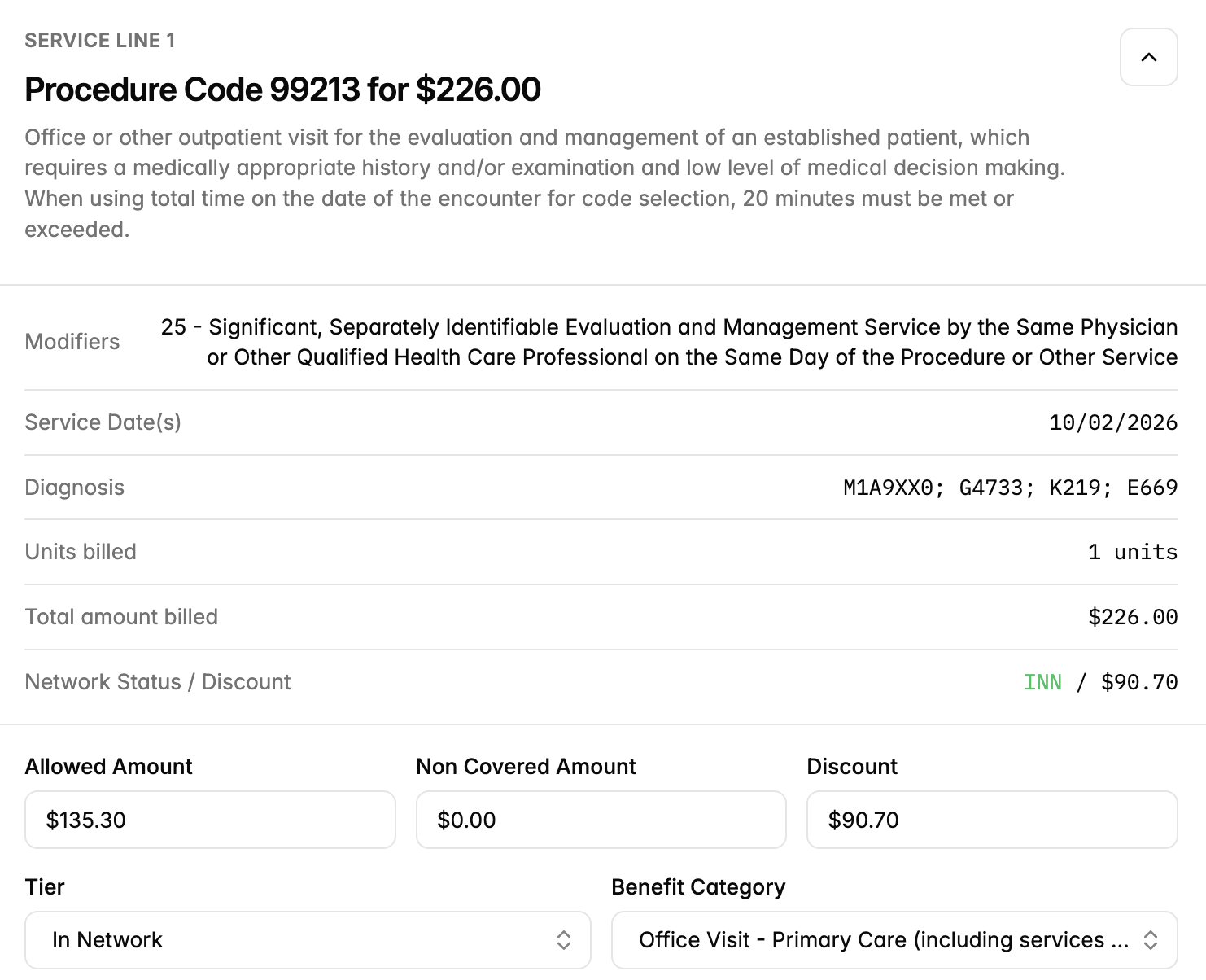
Preventive visit and a medical visit on the same day
A visit is both preventive and diagnostic (e.g., patient has routine exam and addresses a complaint like back pain). The medical provider will split the visit into preventive and diagnostic components.
Labs at annual exam
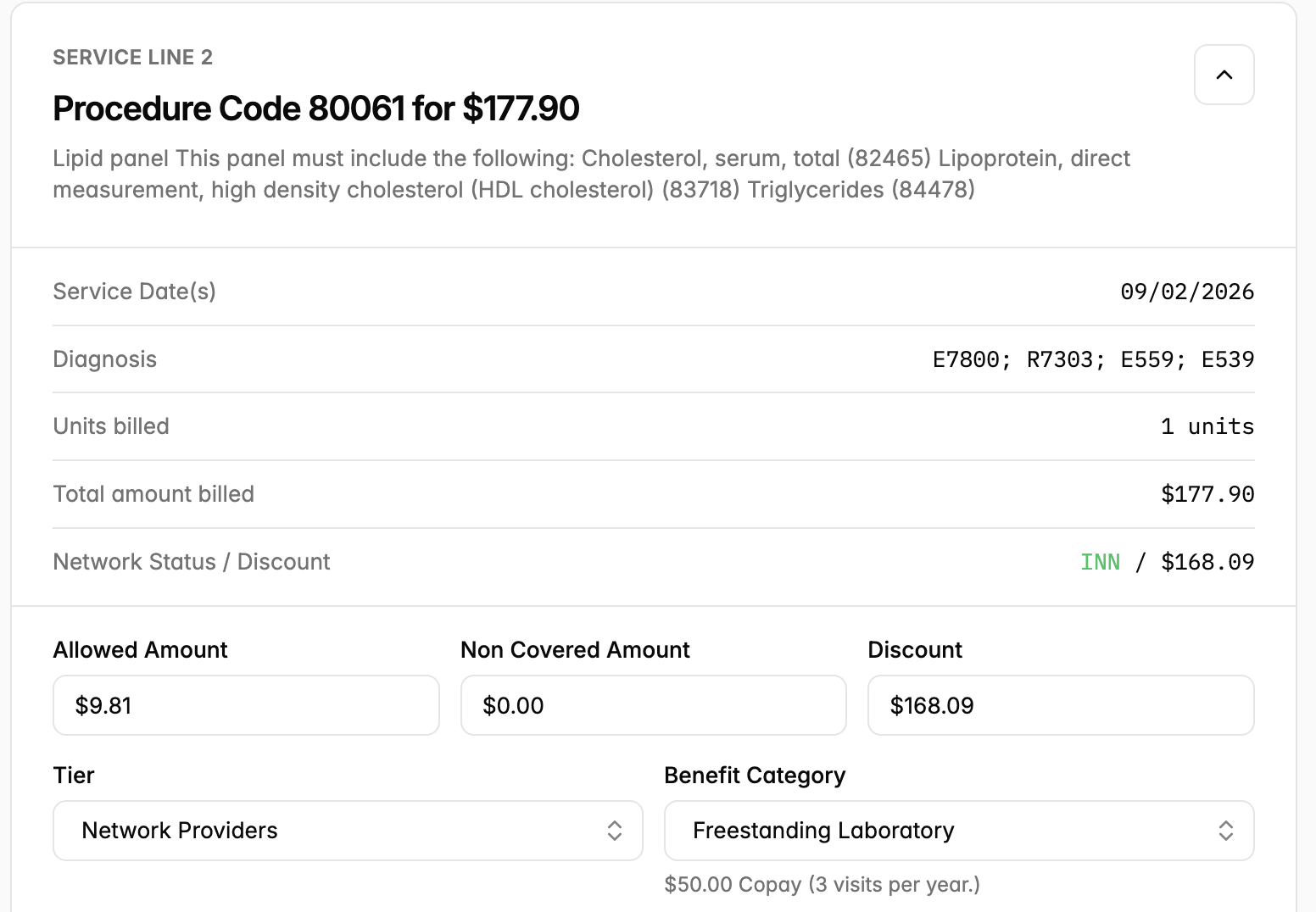
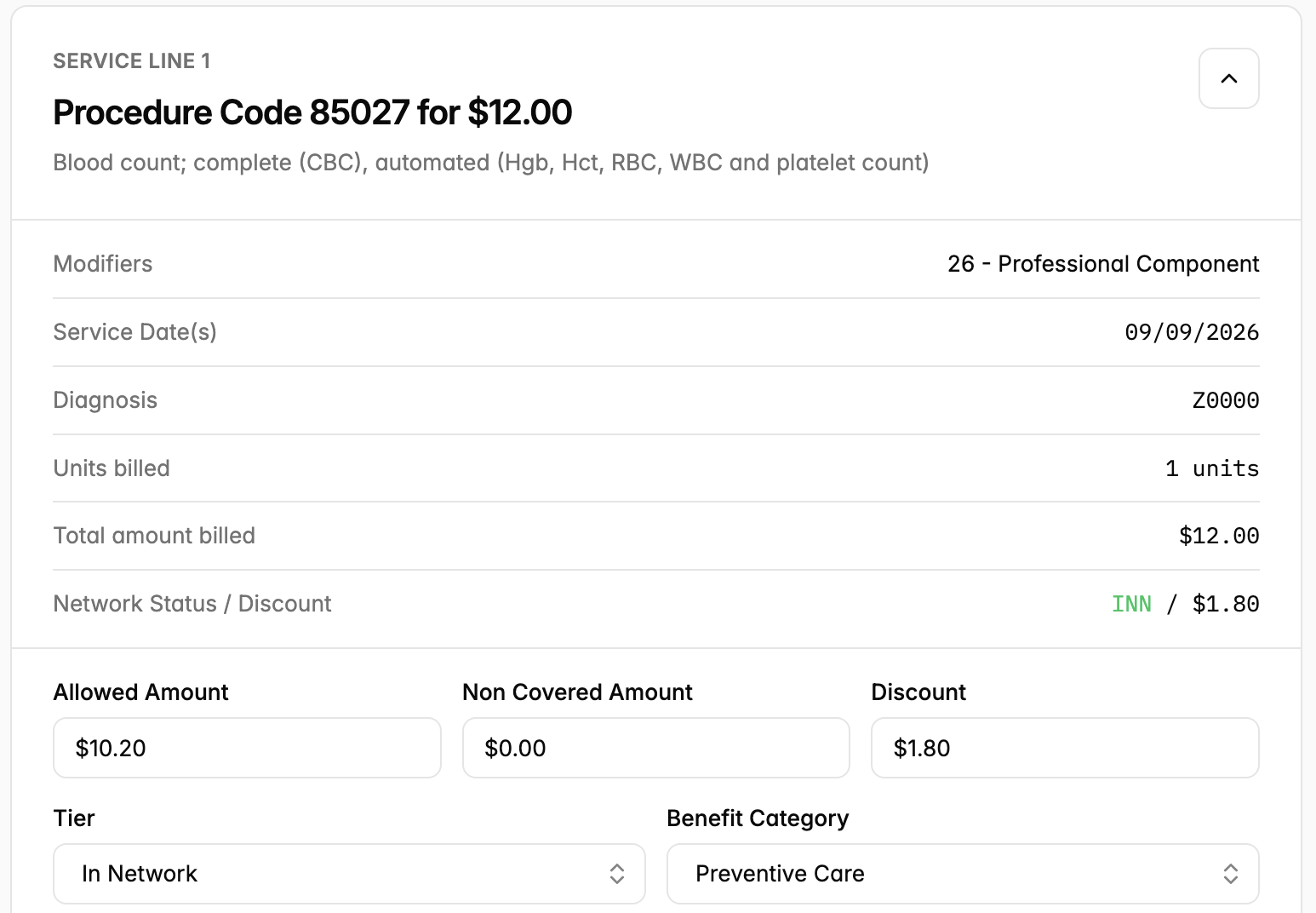
A lab is preventive only if two things are true: The test is on the adult exam list: 80053, 80061, 83036, 85025, 84443, 82607, 36415. A routine or screening diagnosis is on the lab line itself.
Colonoscopy
Preventive when billed as screening:
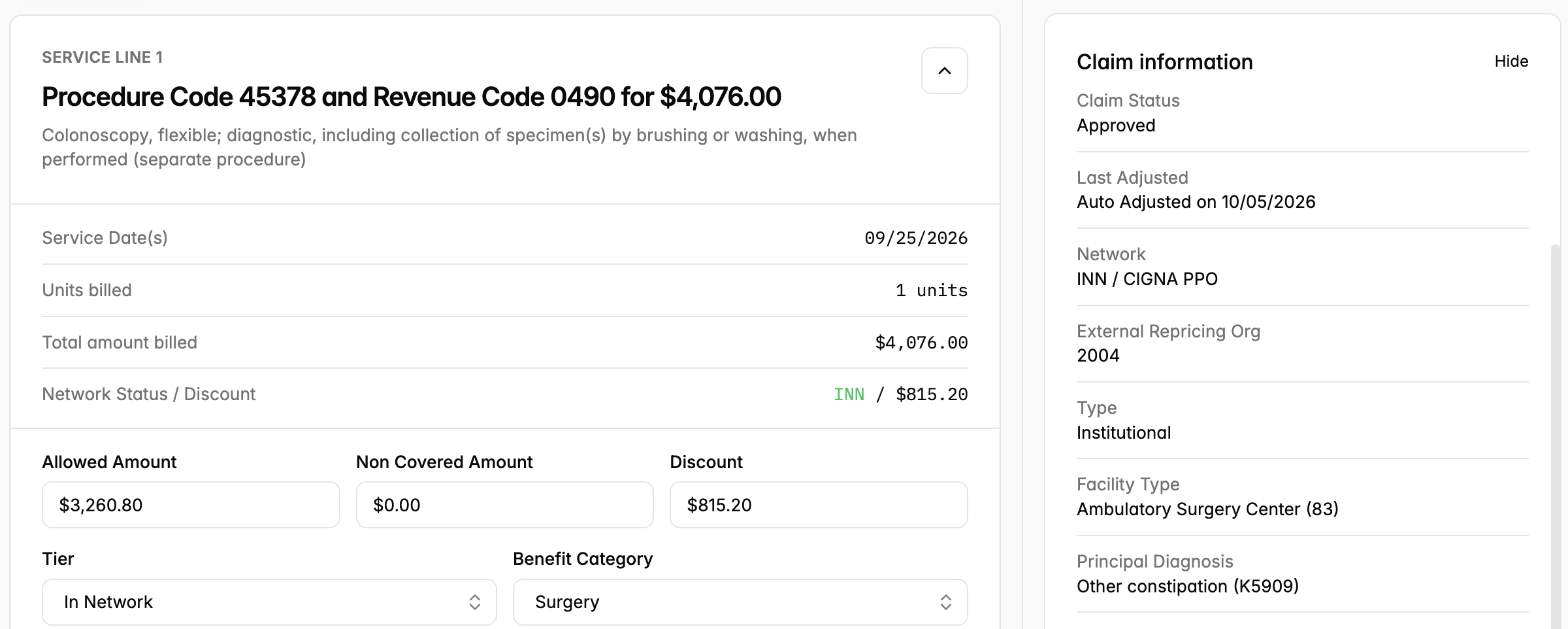
A colonoscopy is preventive when the provider bills it as a screening, using diagnosis code Z12.11 (screening of the colon) or Z12.12 (screening of the rectum).
If Polyps are found or removed, the colonoscopy is still preventive, as long as the provider keeps the screening code on the claim.
For related services, anesthesia and the lab review of removed tissue (pathology) are also preventive when they're billed with the screening code.
If family history of colon cancer (Z80.0) is included, the colonoscopy is preventive.
Not preventive when billed as diagnostic:
Personal history of polyps (Z86.010) alone does not make the colonoscopy preventive. It's processed as diagnostic, unless the screening code is also on the claim.
If symptoms or a known condition (for example, bleeding or abdominal pain) with no screening code, then colonoscopy is diagnostic.
For Facility claims (hospital or surgery center) only the main (principal) diagnosis on the claim counts. It must be the screening code.
Mammogram and follow-up imaging
Screening mammograms: A screening mammogram (77067/77063) is preventive based on the procedure code alone, with no diagnosis required.
Follow-up imaging: For plan years beginning in 2026, additional imaging and pathology needed to complete screening after an abnormal mammogram are covered at $0 in-network under updated ACA preventive guidelines. This may include diagnostic mammograms, ultrasounds, MRIs, and pathology following a biopsy. A breast lump (N63), breast cancer diagnosis, or personal history of breast cancer may still make imaging diagnostic when unrelated to completing an abnormal screening follow-up.
Facility and radiologist claims: A mammogram may generate separate facility and professional claims, with the radiologist billing modifier 26. Both are part of the same mammogram and should count as one screening toward the annual limit, rather than triggering a second-visit limit (PEX).
Pap and HPV
These are preventive with Z01.41x, Z12.4, Z11.51 or Z00.0x. An abnormal-Pap diagnosis next to a routine diagnosis still pays $0. A follow-up test billed with only R87.6x is diagnostic.
Preventive visit limit is met
A PEX remark code is used when the preventive visit limit is met. Example would be when an annual exam occurred or more than five nutritional counseling appointments.
Pregnancy
Preventive: the first prenatal visit, routine prenatal labs, the 24–28 week diabetes screening, Rh antibody testing, breastfeeding support and a pump, and the 6-week postpartum visit. Not preventive: ultrasounds except one screening, high-risk care (gestational diabetes, preeclampsia, preterm labor), labor and delivery, RhoGAM and other injections, and complications.
Eye exams
Routine vision (Z01.00/Z01.01) is usually a vision plan benefit, not medical. Refraction (92015) is always routine and usually excluded. A diabetic eye exam is preventive only with Z13.5 first; a member who already has diabetes gets medical cost share.
Reference: diagnosis codes that decide
Code | Meaning | What it does |
|---|---|---|
Z00.00 / Z00.01 | Adult general exam, without / with abnormal findings | Both are routine. "With abnormal findings" does not make the visit medical. The finding is a secondary code. |
Z00.121 / Z00.129 | Well-child exam, with / without abnormal findings | Routine. Bright Futures screenings at the visit (vision 99173–99177, development 96110) are preventive. |
Z01.411 / Z01.419 | Routine gynecologic exam | Routine. Pap and HPV tests with this diagnosis are screening. |
Z12.x | Cancer screening: Z12.11 colon, Z12.31 breast, Z12.4 cervix, Z12.5 prostate | Screening. The strongest signal on colonoscopy and mammogram claims. |
Z13.x, Z11.x | Other screening: Z13.1 diabetes, Z13.220 lipids, Z13.31 depression, Z11.3 STI, Z11.4 HIV | Screening, if the test itself is on the list. |
Z23 | Immunization | Vaccine (90xxx) plus the admin code (90460–90461, 90471–90474) are preventive. |
Z30.x, Z34.x, Z36, Z39.1–Z39.2 | Contraception, normal pregnancy, prenatal screening, lactation | Preventive within the rules below. |
R-, I-, E-, K-, M- codes and others | A symptom or a known condition (R10.9 abdominal pain, I10 hypertension, E11.9 diabetes) | Medical/diagnostic unless screening codes are included (or screening is principal for facility) |
Z86.010, Z87.x | Personal history | Treat as diagnostic unless the plan list says otherwise. Check with an adjudicator before you commit. |
What happens if the provider coded it wrong
The provider should be contacted and told to submit an updated claim.