

Vendor portal access and file feeds
Portal access
Like all other information types, pharmacy claims and accumulators data is available in the portal for download on the reports page. We are able and willing to give a vendor access to the portal to download this data directly.
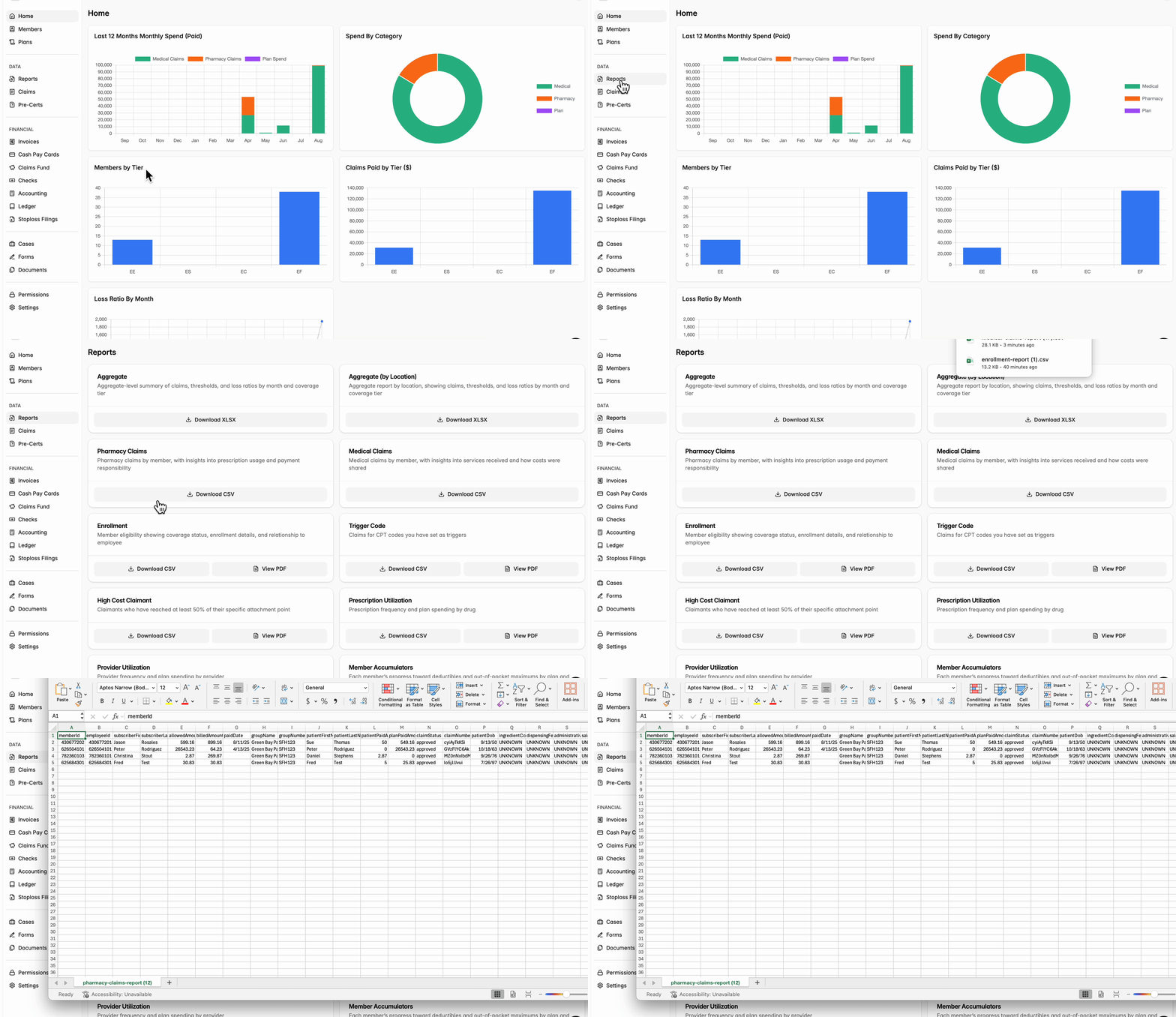
Email file feeds
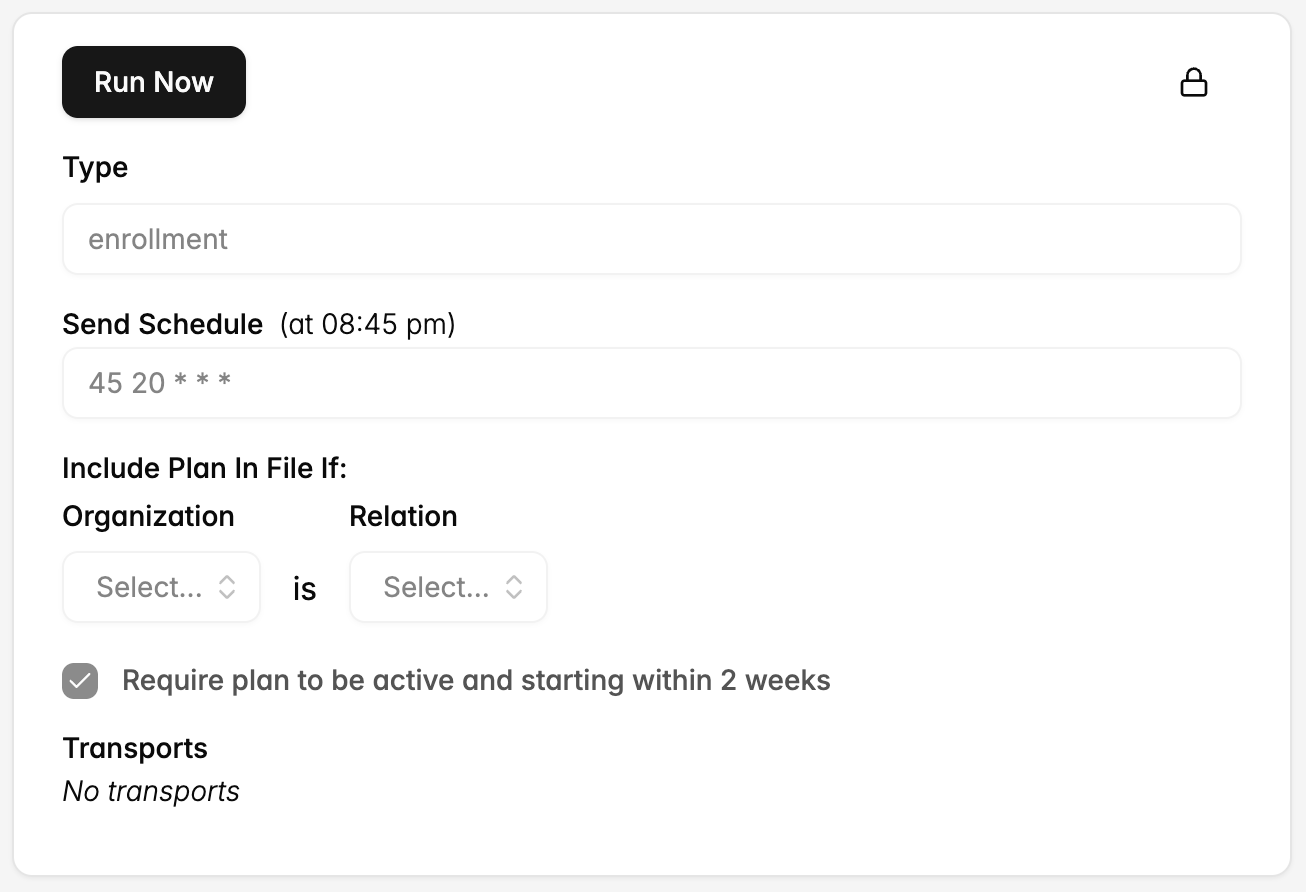
Additionally, we can set up an outbound pharmacy and accumulator file feed to deliver as an CSV at a custom time and frequency to multiple email addresses. To get started, reach out out partners@yuzu.health with details on your preferred:
File types (eligibility, medical claims, pharmacy claims, accumulators, high cost claimants, aggregate reports)
Cadence (send schedule)
Emails
For pharmacy claims and accumulators outbound there is no existing standard EDI format. When we are integrating with high priority vendors we require them to follow the process below:
Process to set up an SFTP connection
Prerequisites
Vendor must provide the required file format specification, including structure, data dictionary, and field definitions.
For pharmacy integrations, vendor must provide a sample claims file for validation that Yuzu can properly ingest.
Any security/compliance documentation related to data transfer must also be shared.
Connection Setup
Yuzu generates and shares SFTP credentials (host, username, password/private key, folder paths)
The vendor configures their system to connect to the Yuzu SFTP server.
Folder paths are standardized:/inbound → files sent to Yuzu.
/outbound → files Yuzu sends to the vendor.
Testing Phase
Initial File Validation: Vendor sends a small set of test files to confirm schema alignment and data element mapping.
Error Handling Protocols: Validate how exceptions (e.g., missing fields, malformed files) are reported and remediated.
Launch / Go-Live
Once testing is successful, file status is moved to Production.
Automated schedule is enabled (e.g., weekly Monday drop).
Ongoing monitoring in the first few weeks ensures successful ingestion and delivery.