

Big Picture Policies
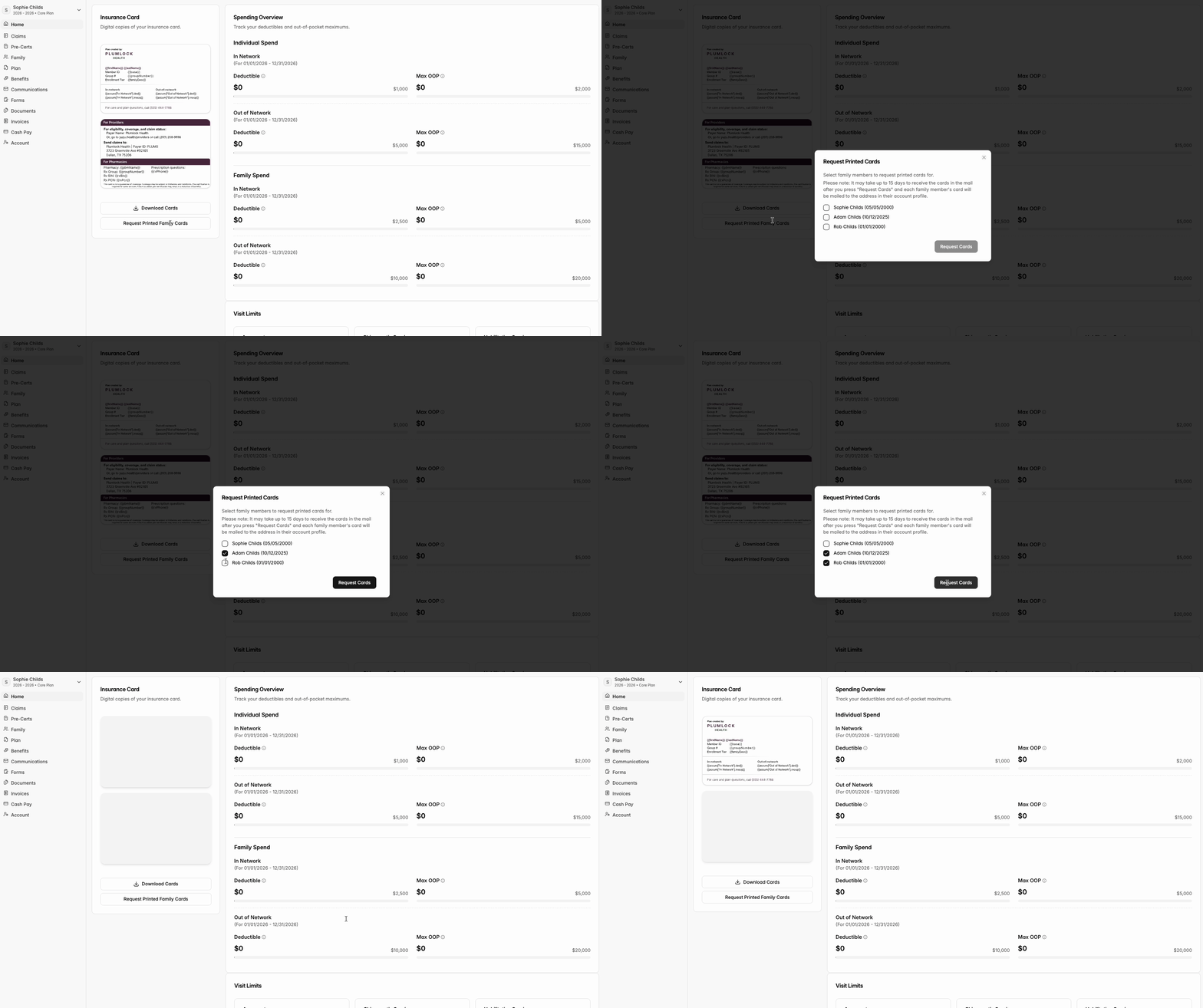
You can use your physical or digital ID card with a provider.
Your digital ID card lives in the member portal, where you can download it.
Your child can use your ID card with a provider.
All cards are mailed to the subscriber’s address.
We mail cards for each family member, but you can request more for you or your children by pressing “Request Printed Card” in their portal.
To be eligible to request a card, your coverage must be active, and your last print request can’t have been within the last 15 days.
How to Read Your Member ID Card
Even though cards can look different depending on your plan and vendors, every Member ID card contains the same core information.
Member Information
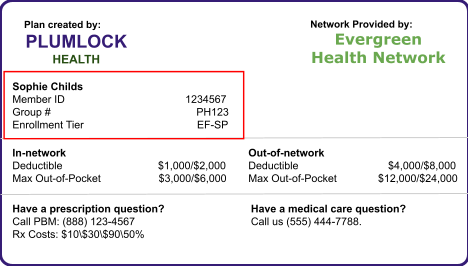
Member ID: Your 7-digit insurance identification number.
Doctors, hospitals, and pharmacies use this number to look up your coverage and bill the plan correctly.
Group Number: Your employer’s plan number.
Everyone at your company will share the same group number.
Enrollment Tier: Your classification as a covered individual under the plan. For example, Sophie Childs in the card above is a Spouse on a Family Plan.
Before the dash:
EE: Employee Plan
ES: Spouse Plan
EC: Child Plan
EF: Family Plan
After the dash:
E: Employee
SP: Spouse
CH: Child
Plan Information
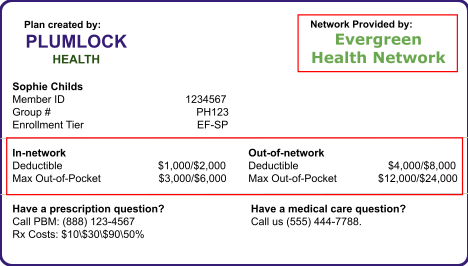
Network: The group of doctors, hospitals, and pharmacies your plan works with. For example, in the card above, Evergreen Health Network is the network.
Staying in-network usually costs less, while out-of-network care may cost more or may not be covered.
Deductible: The amount you must pay out-of-pocket for covered services before your health insurance starts to pay. For example, in the card above, the individual in-network deductible is $1,000 and the family in-network deductible is $2,000.
Individual Deductible: The deductible that applies to one person on the plan. That’s the first number before the backslash.
Family Deductible: The total deductible that applies to all covered family members combined. That’s the second number after the backslash.
Max Out-of-pocket: The most you will have to pay in a policy period for covered services. The out-of-pocket maximum includes deductibles, copayments, and coinsurance, but not premiums. For example, in the card above, the individual out-of-network max OOP is $12,000 and the family out-of-network max OOP is $24,000.
For more information on deductibles and max out-of-pockets, read our Insurance Basics.
Pharmacy Benefits Information
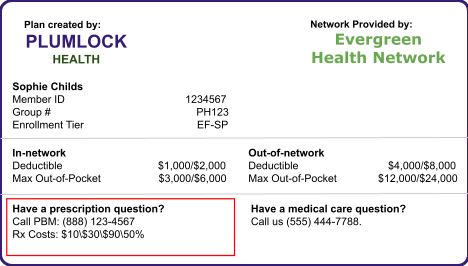
Prescription Coverage: Information about how your medications are covered, including your copay or coinsurance.
Copay: A fixed dollar amount you pay for a service, such as a doctor visit, emergency visit, or prescription, usually paid at the time of service.
Coinsurance: A percentage of the cost you pay after meeting your deductible, while the insurance pays the rest.
Other Information
Since every card is different, your card may include other information beyond what we included on our sample member card above. That information may be about:
Your Primary Care Provider (PCP). This is your “main doctor” who would typically be your first stop for care.
Your Coordinated Care. This is care organized through your primary care team, which helps lower costs for you and avoid unnecessary care.
Your Uncoordinated Care. This is care that is not managed through your primary care team and usually comes with higher deductibles or costs.